Construction-Ready Site
Deliver a totally clear, level envelope for builders, concreters, and surveyors without hidden root obstructions.
Comprehensive site preparation, scrub clearing, and bushfire defensible space creation in Ironbark.
Block and site clearing across Ironbark, Maiden Gully, and Bendigo
Preparing a block for building, boundary fencing, or bushfire protection requires methodical, heavy-duty land clearing. Our land clearing Ironbark services clear dense scrub, invasive weed trees, and unwanted timber to leave clean, level ground ready for your project.
Ironbark blocks often transition from historic residential lots to steep, rocky terrain with thick regrowth. Navigating shallow sandstone bedrock, dense box-ironbark timber, and strict Clause 52.17 native vegetation guidelines demands experienced local arborist management.
Deliver a totally clear, level envelope for builders, concreters, and surveyors without hidden root obstructions.
Create clean, compliant buffer zones around your dwelling to reduce radiant heat and ember attack hazards.
Safely retain healthy, mature native trees while clearing unwanted scrub, enhancing property value and shade.
We inspect property boundaries, identify trees for retention, and check planning overlays in Ironbark.
We confirm exemptions (such as the 10m bushfire rule) or ensure council permits are verified.
Our machinery clears underbrush, fells marked trees, and grinds stumps efficiently.
We process timber, spread mulch or cart waste, leaving a tidy, accessible site ready for construction.
If you are preparing a site for a new build, managing bushfire hazards, or developing acreage, professional Land Clearing Ironbark is an absolute necessity. Ironbark and the wider Bendigo region feature a unique landscape of stony ridges, established Box Ironbark forests, and residential expansion that butts right up against high-fuel bushland. Navigating this terrain requires robust machinery, local arboricultural knowledge, and a deep understanding of our notoriously hard, shallow soils.
Our team is equipped to handle everything from selective residential clearing to full-scale hazard reduction on steep, heavily vegetated blocks. We know that clearing land here isn't just about knocking down vegetation; it is about proper site preparation, protecting retained canopy, and ensuring absolute compliance with City of Greater Bendigo planning schemes. Whether you need a fence-line cleared, an Asset Protection Zone (APZ) established, or space made for a new shed, our arborists and heavy machinery operators deliver a safe, thorough, and highly efficient result.
Attempting DIY block clearing or hiring under-qualified operators frequently leads to significant property damage, compliance breaches, and blown-out budgets. Bendigo's landscape is unforgiving. Our soils consist of Ordovician sandstone and sodic duplex on the slopes, with heavy buckshot gravel and very low permeability. Light-duty equipment simply bounces off this hard ground, leaving hazardous stumps and deep ruts that invite severe soil erosion during winter downpours.
Beyond the machinery challenges, the regulatory risks are severe. The City of Greater Bendigo enforces strict rules under Significant Landscape Overlay Schedule 1 (SLO1) and Clause 52.37 for canopy trees. Removing protected native vegetation—even a standing dead tree over 40cm in diameter under Clause 52.17—without a permit can trigger massive local council fines.
There is also the hidden danger of Bendigo's goldfields history. A Depression-era program capped roughly 300 old mine shafts around the city using timber sleepers that are now decaying. Driving heavy excavators or blindly grinding stumps over these poorly mapped shafts can cause catastrophic cave-ins. Our team conducts thorough pre-work assessments to identify these hazards, flag protected vegetation, and execute the clearing safely. We ensure your retained trees are protected to AS4970 standards, avoiding the weak regrowth and decay associated with reckless lopping or untargeted bulldozer work.
We tailor our land clearing methods to Ironbark's unique terrain. From navigating shallow regolith to executing selective clearing around heritage-listed exotics and native box ironbark, our team uses industry-leading equipment and AS4373-compliant techniques.
Before any chainsaws start, our consulting arborists assess the site against Greater Bendigo's planning scheme. We map out retained trees, establish Tree Protection Zones (TPZ) under AS4970, and ensure compliance with Clause 52.17 for native vegetation and any local SLO1 or Heritage Overlays.
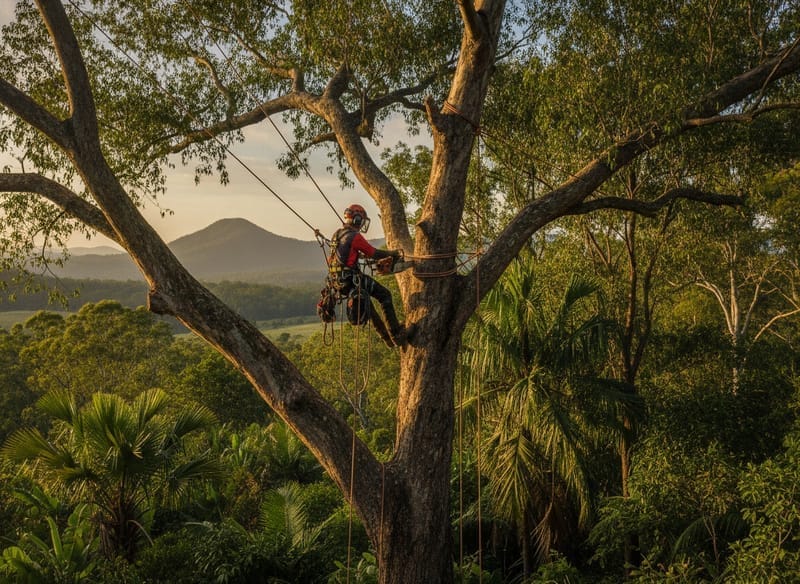
Using advanced directional felling and rigging techniques, our AQF-qualified climbers dismantle hazardous or unwanted trees piece-by-piece. We routinely work around established Red Ironbark and Grey Box, meticulously clearing the understory and invasive scrub while preserving the structural integrity of your retained canopy.
The entire Greater Bendigo municipality sits inside a designated bushfire-prone area. We implement AS3959-compliant clearing to establish critical APZs, strictly applying the 10-metre rule to remove trees near existing accommodation buildings and strategically reducing fuel loads across your property.
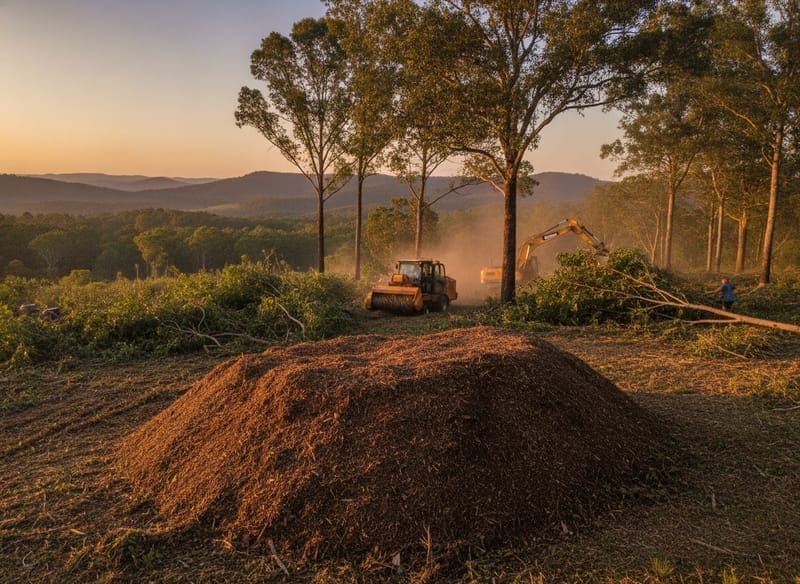
We utilise high-capacity 12-inch wood chippers and ground saws (such as the MS500i and 572XP) to rapidly process felled timber. The resulting mulch can be left on-site to help stabilise the highly erosive sodic duplex soils, or completely removed in our tipper trucks for a clean finish.
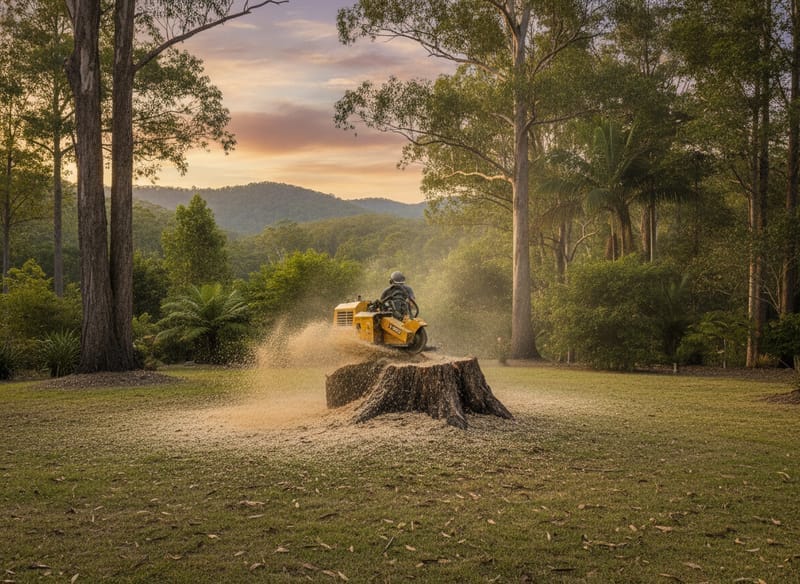
Bendigo's stony ground requires heavy-duty stump grinding. We deploy powerful tracked and self-propelled grinders capable of safely turning stumps to mulch 150-300mm below grade, taking extreme care to assess the ground for historic mine shafts and quartz reefs before commencing.
Delivering a flawless Land Clearing Ironbark project requires a structured, safety-first approach. We manage the entire process from the initial walk-through to the final site cleanup, ensuring your block is perfectly prepped and council-compliant. - Site Inspection and Risk Assessment: We walk the property to understand your exact goals, assess soil stability, check for historic goldfields shafts, and identify trees protected under Clause 52.37 or SLO1. - Quotation and Planning: We provide a transparent quote and advise on any AQF Level 5 reports or Greater Bendigo council permits required for native vegetation removal. - Mobilisation and Setup: Our team arrives with skid steers, tipper trucks, and heavy-duty chippers, establishing Tree Protection Zones around any heritage elms, Moreton Bay figs, or native ironbarks you are retaining. - Systematic Clearing: We sequentially fell and process the designated vegetation, using advanced rigging and rope-access for complex removals near structures. - Cleanup and Grinding: We grind stubborn stumps out of the rocky regolith and rake the site clean, leaving nutrient-rich mulch or hauling all waste away.
When you hire us for your block clearing, you are working with a fully insured, highly credentialed arborist business. We hold comprehensive Public Liability and WorkCover insurance, protecting your property and our staff at all times.
Our on-site operations are led by AQF Level 3 qualified arborists and climbers, with AQF Level 5 consulting capabilities available for formal Development Application (DA) arborist reports. Every cut we make on retained trees strictly follows AS4373 (Pruning of Amenity Trees), and we install robust physical barriers to meet AS4970 (Protection of Trees on Development Sites). From High-Risk Work EWP tickets to chainsaw felling accreditations, our crew operates to the highest national safety standards.
Executing land clearing in Ironbark means navigating a very specific environment. The local canopy is a unique mix of Box Ironbark forest—dominated by Red Ironbark, Grey Box, and Yellow Gum—and heritage-listed exotic plantings.
Council regulations here are highly specific. Under Clause 52.37, boundary canopy trees are protected, but the trap for many acreage owners lies in the native vegetation rules. Even standing dead native trees over 40cm in diameter require a permit under Clause 52.17. If your property falls under the Significant Landscape Overlay (SLO1) common in Bendigo's bush block suburbs, nearly all native vegetation is protected.
Furthermore, the physical terrain dictates our approach. The ground is typically 35m to 50m of weathered regolith with coarse, stony soil that dictates how we position heavy EWPs and grinders. We also operate with acute awareness of Bendigo's extreme summer fire risk, expertly clearing understory fuels while retaining the healthy canopy trees that define the region's character.
Once your Land Clearing Ironbark project is complete, managing the exposed soil is your first priority. Bendigo's sodic duplex soils have very low permeability and are highly prone to erosion during the June-to-September rains. We highly recommend spreading the chipped organic matter across the cleared ground to stabilise the topsoil and suppress aggressive weed regrowth. If you are managing an Asset Protection Zone, ongoing maintenance is crucial. You should schedule a follow-up inspection before the 126-day fire season begins to clear any fast-growing scrub or epicormic regrowth. Call our team whenever you need structural pruning or deadwooding on your retained canopy trees to keep them safe and compliant.
Land clearing in Ironbark is quoted based on site acreage, vegetation density, terrain slope, and machinery required.
We conduct thorough site visits in Ironbark to deliver clear, comprehensive fixed-quote proposals.
We provide professional land and block clearing across Ironbark and all Greater Bendigo districts.
Contact our experienced team for expert site preparation, scrub clearing, and fire break works.
Get a Clearing Quote