Smoother Council Approvals
Meet all technical documentation requirements for City of Greater Bendigo planning and VicSmart applications.
Comprehensive AQF Level 5 tree assessments, planning application reports, and structural risk documentation.
Providing consulting arborist reports across Long Gully and Greater Bendigo.
When seeking council development approval, verifying tree safety, or resolving boundary tree issues, an arborist report Long Gully written by our AQF Level 5 arborists provides the legal and technical clarity required.
City of Greater Bendigo planning controls require formal arborist justification when proposing tree removal near boundaries or on development sites. With many Long Gully properties featuring mature remnant box ironbark species alongside historic street exotics, objective arboricultural data is essential for smooth planning approvals.
Meet all technical documentation requirements for City of Greater Bendigo planning and VicSmart applications.
Integrate development footprints around valuable mature trees using accurate Tree Protection Zone calculations.
Obtain written, legally recognized evidence of tree hazard status for property management or insurers.
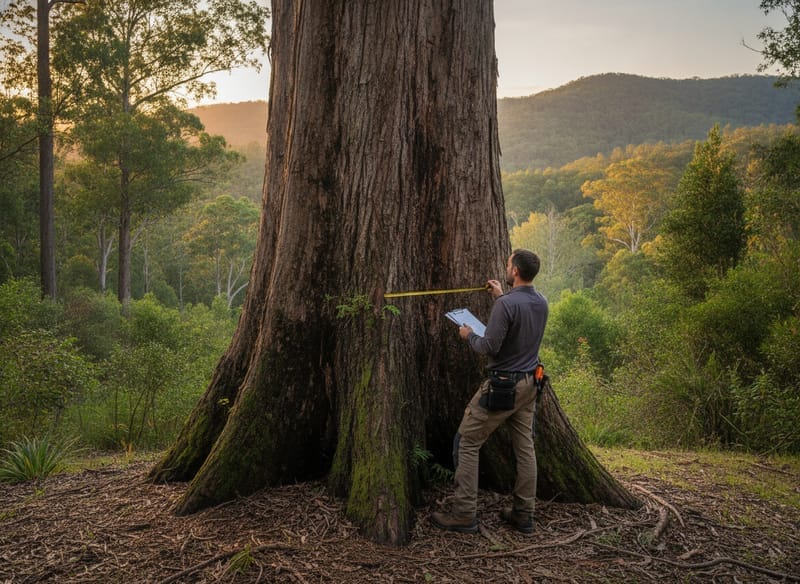
Our AQF Level 5 arborist measures DBH, canopy spread, height, health, and structural defects on site.
We calculate TPZ, SRZ, and encroachment percentages in accordance with AS4970-2009 or planning clauses.
We compile a structured written report complete with high-resolution photos, site plans, and recommendations.
We provide the finalised PDF report ready for submission to the City of Greater Bendigo or your designer.
If you are planning a build, subdividing a block, or dealing with a hazardous mature tree, securing a comprehensive Arborist Report Long Gully is the critical first step. Whether you are managing remnant box ironbark forest on a steep bush block or an aging exotic species on a residential street, navigating the local planning scheme requires accurate, professional documentation.
Here in Long Gully, property owners face a unique combination of hard, stony ground, aging tree canopies, and strict local vegetation overlays. Moving forward with development or risk mitigation without proper assessment can lead to council rejections, project delays, or unsafe conditions. Our experienced team provides detailed, site-specific reports that satisfy council requirements, protect your property, and ensure you understand exactly what is happening above and below the ground.
One of the most common issues homeowners and developers face is submitting a development application with an inadequate tree assessment. A simple quote from a lopper or a brief letter from an unqualified tradesperson will not pass the strict threshold set by the City of Greater Bendigo. When DIY or under-qualified reports are submitted, council halts the process. This results in stressful requests for further information, costly holding fees, and months of unnecessary project delays.
Furthermore, failing to properly identify Structural Root Zones (SRZ) on Long Gully's hard, shallow Ordovician rock often leads to devastating root damage during earthworks, causing retained trees to slowly die post-construction.
We solve this by supplying documentation authored exclusively by an AQF Level 5 Diploma-qualified consulting arborist. We conduct meticulous site visits, apply industry-standard Visual Tree Assessment (VTA) methods, and align every submission with local overlays and Australian Standards. Our comprehensive approach ensures your reports are accepted the first time, keeping your project moving and your site safe.
We deliver highly detailed, formal documentation that project managers, architects, and local authorities demand. Every document is prepared by our in-house consulting experts to the highest technical standard.
Comprehensive site inventories capturing species identification, Diameter at Breast Height (DBH), and Safe Useful Life Expectancy (SULE) ratings. These reports provide clear retention or removal recommendations tailored for council planning submissions.
Critical for building sites, we calculate and map out Tree Protection Zones (TPZ) and Structural Root Zones (SRZ). This specifies required protective fencing, root-sensitive excavation methods, and supervised work zones to ensure retained trees survive construction.
Utilising Visual Tree Assessment (VTA) principles, we document structural defects, canopy decline, and target zones. This quantifies the likelihood and consequence of failure, providing duty-of-care documentation for high-risk mature trees.
Detailed documentation required when applying to remove protected vegetation under Bendigo's specific overlays. We outline the tree's condition, the physical constraints of the site, why retention is not viable, and suggest appropriate replanting strategies.
Step 1: Initial Consultation. We begin by discussing your specific goals—whether you are clearing a building envelope, resolving a neighbour dispute over a hazardous branch, or responding to a mandatory council request. Step 2: On-Site Assessment. Our consulting arborist visits your property to conduct a thorough physical inspection. We measure trunk diameters, assess canopy spread, evaluate health and structural integrity, and identify crucial site constraints like poor soil permeability or proximity to structures. Step 3: Data Analysis and Overlay Review. We cross-reference our field data with the City of Greater Bendigo planning scheme. We check for triggers under the new Clause 52.37 Canopy Tree rules, Significant Landscape Overlays, and address-specific Heritage listings. Step 4: Report Generation. We compile a comprehensive PDF document featuring high-resolution site photography, precise root zone mapping, formal risk matrices, and actionable recommendations. Step 5: Delivery and Support. You receive the finalised Arborist Report ready for immediate submission to the council or your project manager. We remain available to clarify technical findings with your builder or the local planning department.
The City of Greater Bendigo requires formal tree assessments to be conducted by a suitably qualified professional. All our reports are authored by an AQF Level 5 Diploma-qualified consulting arborist. We rigorously apply AS4970 (Protection of Trees on Development Sites) for construction projects and reference AS4373 (Pruning of Amenity Trees) when specifying any remedial canopy work.
Our operations are fully insured. We carry both comprehensive public liability and professional indemnity insurance, giving you, your builder, and the local council complete confidence in the accuracy of our data, mapping, and technical recommendations.
Preparing an accurate assessment in this region requires deep local knowledge. Long Gully properties sit on hard sandstone and siltstone with a weathered regolith and highly impermeable clay subsoils. This forces tree roots outward into shallow plates rather than deep down. Mapping root zones accurately is incredibly important here, especially for top-heavy native species like Red Ironbark and Grey Box, which are prone to windthrow if site works sever their anchor roots.
We also navigate the specific legislative landscape of Bendigo. With the introduction of Clause 52.37 Canopy Trees, boundary trees over 5m tall now trigger permit requirements even on established blocks. Additionally, we must check for Significant Landscape Overlay Schedule 1 on semi-bush residential blocks and carefully review the city's extensive Heritage Overlays, which can protect individual exotic species like English Elm right down to a specific street address.
Once your report is approved, the physical management of the site begins. For development blocks, you must install the specified AS4970 tree protection fencing before any earthworks, demolition, or heavy machinery arrive. It is vital to keep the protective mulch layers intact over the root zones to retain moisture, especially during Bendigo's hot, dry summers.
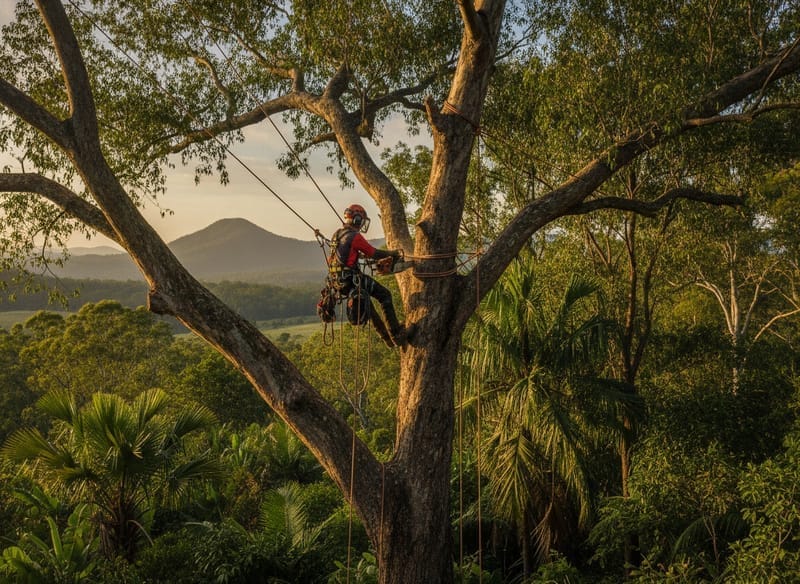
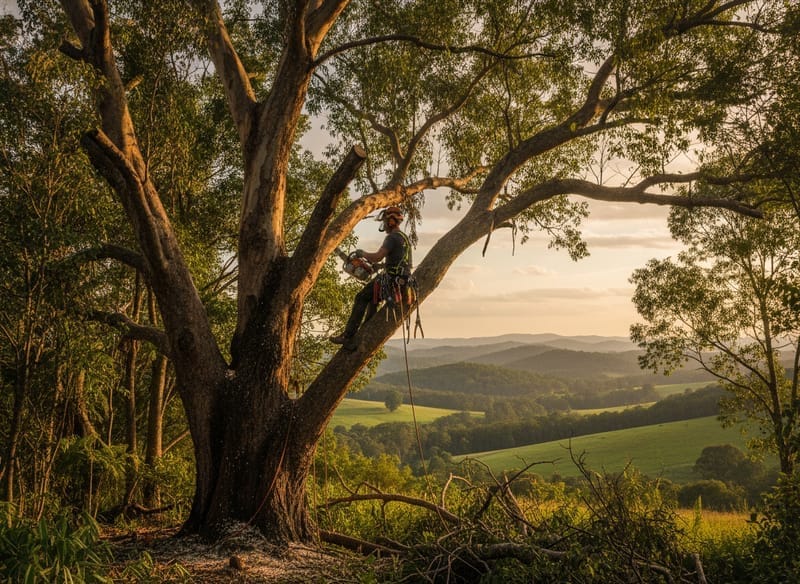
If the report specifies remedial pruning or deadwooding to mitigate risk, our AQF Level 3 climbing arborists can execute the work to precise AS4373 standards. For aging, large-canopy trees retained near high-traffic areas, we recommend calling us back for a visual reassessment every 12 to 18 months.
Arborist report fees in Long Gully reflect the number of trees assessed, the depth of testing, and the purpose of the report.
We provide clear, fixed-price quotations for all consulting arborist reports with no unexpected project fees.
Our AQF Level 5 arborists prepare tree reports across Long Gully and all Greater Bendigo districts.
Contact our consulting arborists today for expert development assessments and council-ready reports.
Request a Report Quote