Streamlined Insurance Processing
Get itemised arborist invoices and damage details to speed up your home insurance claim.
Comprehensive storm cleanup, hung limb removal, and insurance-ready arborist reports across White Hills.
Restoring storm-affected properties across White Hills, Epsom, and East Bendigo.
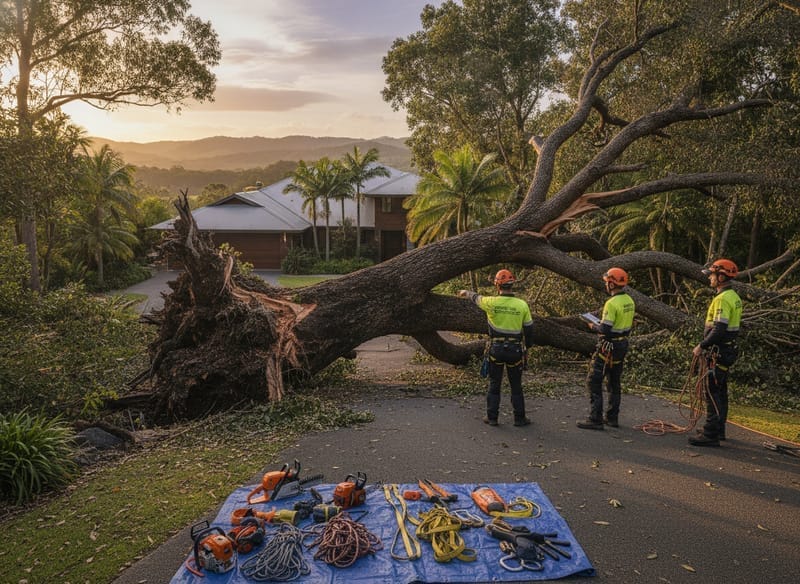
Our Storm Damage Tree Removal White Hills service manages post-storm garden recovery, clearing dangerous fallen canopies and restoring site safety.
White Hills receives approximately 505mm of annual rain, heavily concentrated between June and September. Saturated winter and spring ground followed by severe cold fronts frequently destabilises tall trees anchored in shallow, non-permeable subsoils.
Get itemised arborist invoices and damage details to speed up your home insurance claim.
Professional remedial pruning cleans broken branches cleanly, allowing the tree to recover naturally.
We turn piles of storm debris into valuable mulch or haul everything away completely.
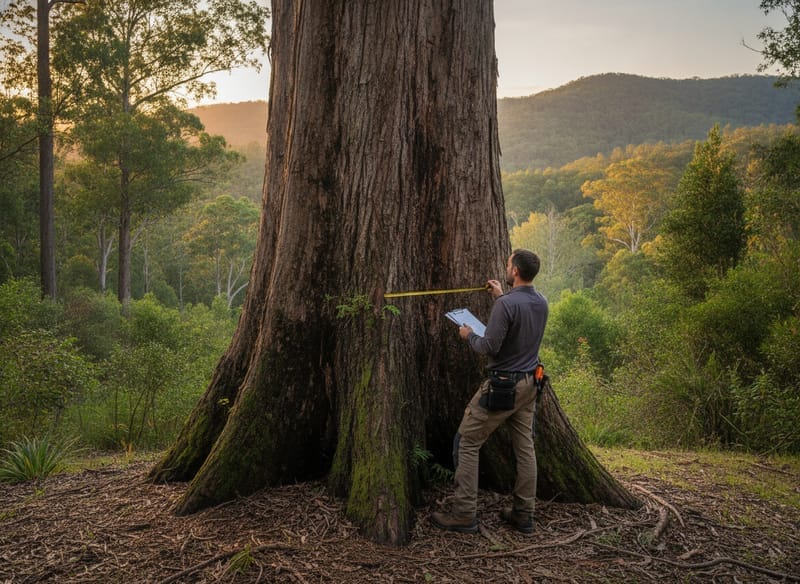
We inspect all storm-affected trees, identifying active hazards and root damage.
We provide a written scope of work and quote suitable for insurer pre-approval where needed.
Our crew cuts, lowers, and processes fallen timber and suspended canopy branches safely.
We prune ragged tear-outs on standing trees, mulch the waste, and rake your grounds clean.
When severe weather strikes, prompt and professional Storm Damage Tree Removal White Hills is critical to securing your property and restoring safety. Bendigo is highly susceptible to intense, localized weather events, from the destructive October 2021 storms to the high-wind days that batter exposed ridgelines. Because our region sits on shallow, stony Ordovician regolith and sodic duplex soils with very low permeability, heavy rainfall often leads to catastrophic root-plate failures, sending massive, mature trees toppling onto fences, driveways, and homes. Our team of qualified arborists at Bendigo Arborist is based right here, fully equipped to respond to storm emergencies across White Hills and the wider municipality. We understand the specific failure modes of our local canopy—from River Red Gums dropping massive limbs on still, hot afternoons to towering English Elms and Red Ironbarks compromised by wind sheer. Whether you are dealing with a completely uprooted tree, a hung-up branch threatening your roof, or a canopy left structurally unsound, our climbers and ground crews have the heavy plant and technical expertise to dismantle the hazard safely, methodically, and without causing secondary damage to your property.
Storm-damaged trees are inherently unpredictable. When a large tree fails, the wood is subjected to extreme, unnatural tension and compression forces. Homeowners or unqualified laborers who attempt DIY chainsaw work often find themselves dealing with violent branch spring-backs, dangerous equipment kickback, or sudden trunk roll. Furthermore, removing a fallen tree without assessing the remaining standing canopy can leave secondary hazards in place. Often, a storm will cause micro-cracks in adjacent trunks or leave heavy limbs "hung up" out of sight, ready to fall in the next gentle breeze.
At Bendigo Arborist, we solve these complex hazards with a rigorous, AS4373-compliant approach. We do not just clear the debris; our AQF Level 3 and Level 5 arborists assess the structural integrity of the entire affected canopy. If a tree has sustained heavy damage but can be saved, we perform targeted crown reduction or selective pruning to restore its balance, explicitly avoiding harmful "lopping" which only encourages weak, dangerous epicormic regrowth. If full removal is the only safe option, we manage the massive weights and awkward angles using advanced rope rigging and elevating work platforms, ensuring the tree is dismantled with absolute control. We also provide heavily detailed, line-itemized quotes and photographic evidence, streamlining your insurance claims.
Handling storm-damaged timber requires specialized techniques. The forces acting on a fallen or leaning tree mean standard felling practices do not apply. Here is how our team manages complex storm recoveries.
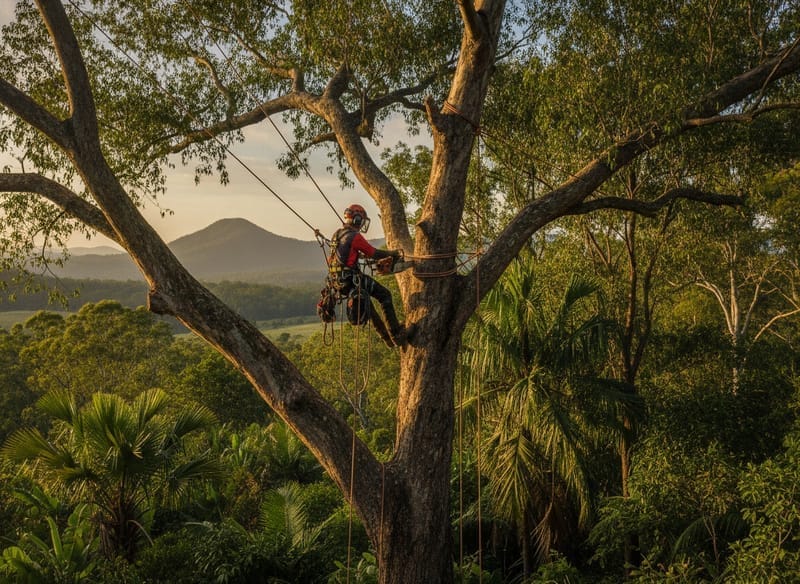
We stabilize the site by isolating immediate hazards over houses, power lines, and driveways. Using elevating work platforms (EWPs) and top-handle climbing saws, our arborists carefully severe tensioned limbs and remove hung-up branches before beginning full extraction.
For trees that are partially failed or leaning over structures, we utilize double-rope technique (DRT) climbing and heavy-duty friction devices to lower timber in controlled sections, neutralizing unpredictable weight distribution and preventing collateral damage to roofs and fences.
Trees uprooted from Bendigo's shallow, stony ground present unique rolling hazards. We use skid steers, loader cranes (HIABs), and specialized winching to stabilize the root ball before cross-cutting the trunk, preventing the stump from suddenly standing back up.
When a massive tree, such as a mature Grey Box or heritage Moreton Bay Fig, fails in a confined White Hills backyard, we deploy mobile cranes to lift multi-ton sections safely over the house. This also minimizes ground pressure on older blocks where historical, timber-capped mine shafts may be present.
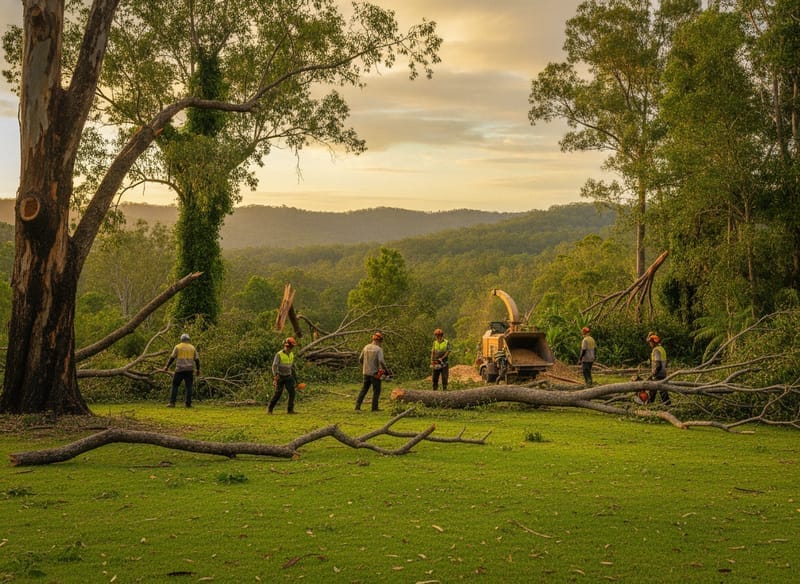
We deploy heavy-duty 9-inch and 12-inch wood chippers alongside tipper trucks to rapidly process massive volumes of storm debris on-site. The green waste is removed entirely, or processed into high-quality mulch for your garden, leaving the property safe and clear.
Executing a flawless Storm Damage Tree Removal White Hills requires speed, safety, and a highly systematic approach. When you call us following a storm event, our first step is rapid site triage. We walk the property and tag trees by priority: identifying immediate hazards threatening life or structures, secondary hazards like hung-up limbs, and trees that are damaged but still standing. Once the triage is complete, our climbers and EWP operators commence make-safe work. We focus first on relieving the most critical tension points and clearing access pathways. Throughout this phase, our AQF Level 5 consulting arborist can document the damage, providing you with the exact photographic evidence and arborist reports required by your insurer. With the immediate danger mitigated, we proceed to the systematic dismantling of the remaining damaged timber. Utilizing heavy ground saws (like the MS500i or 572XP), loaders, and sometimes crane assistance, we process the logs and heavy limbs. We are highly conscious of the local terrain, taking care not to place heavy plant over unknown ground that could harbor decaying historical mine shafts. Finally, we chip all debris, rake the site clean, and conduct a handover inspection to ensure you are completely satisfied with the recovery of your property.
Storm recovery is high-risk work that demands strict adherence to Australian Standards. All our pruning and hazard mitigation work complies strictly with AS4373 (Pruning of Amenity Trees), ensuring we never compromise the long-term health of retained trees through outdated lopping practices. We also adhere to AS4970 if the storm damage impacts trees within designated Tree Protection Zones on development sites.
Our team consists of AQF Level 3 climbing arborists and AQF Level 5 consulting arborists. We hold all necessary high-risk tickets, including elevated work platform, working at heights, and advanced tree felling units. For your absolute peace of mind, our business is fully insured with comprehensive public liability and mandatory WorkCover for all employees.
Navigating storm damage in the City of Greater Bendigo requires an understanding of local planning laws. Fortunately, the council scheme includes exemptions for emergency work where a tree presents an immediate risk of injury or property damage. However, this is limited strictly to the part of the tree creating the risk, and council expects a suitably qualified professional to make that call. For non-emergency removals in White Hills, Clause 52.37 (Canopy Trees) now applies, requiring a permit for boundary trees over 5m tall unless specific exemptions are met. The area’s heritage overlay is also highly specific; it often names individual trees at specific addresses, meaning that majestic old English Elm or heritage Moreton Bay Fig might literally be listed on your title. Furthermore, the local geology—shallow Ordovician regolith with heavy sandstone fragments—means uprooted trees leave massive, rocky craters that require professional machinery to rehabilitate safely.
Once the immediate storm damage has been cleared, ongoing maintenance is crucial for the trees that remain. High winds often cause structural micro-fractures in the canopy that may not be visible. We recommend visually inspecting your remaining mature trees over the following weeks, looking for lifting soil plates at the base or unusual weeping from the trunk. If we have performed remedial pruning to save a damaged tree, you should monitor it for excessive epicormic growth (small, fuzzy shoots along the trunk), which indicates stress. Proper mulching and deep watering during Bendigo's dry summer months will aid recovery. If you notice hanging deadwood or new cracks, call our team for a follow-up assessment.
Storm damage cleanup costs in White Hills depend on the volume of fallen timber, structural impacts, and cleanup complexity.
We provide transparent, clear estimates tailored for homeowners and insurance claims.
We provide storm damage tree removal across White Hills and surrounding Bendigo communities.
Contact our qualified arborists for fast, professional storm cleanup and insurance reporting.
Get a Free Quote